Max Andrzejewski 

Max_Andrzejewski_Portrait_01
Max_Andrzejewski_Portrait_05
Max_Andrzejewski_Portrait_03

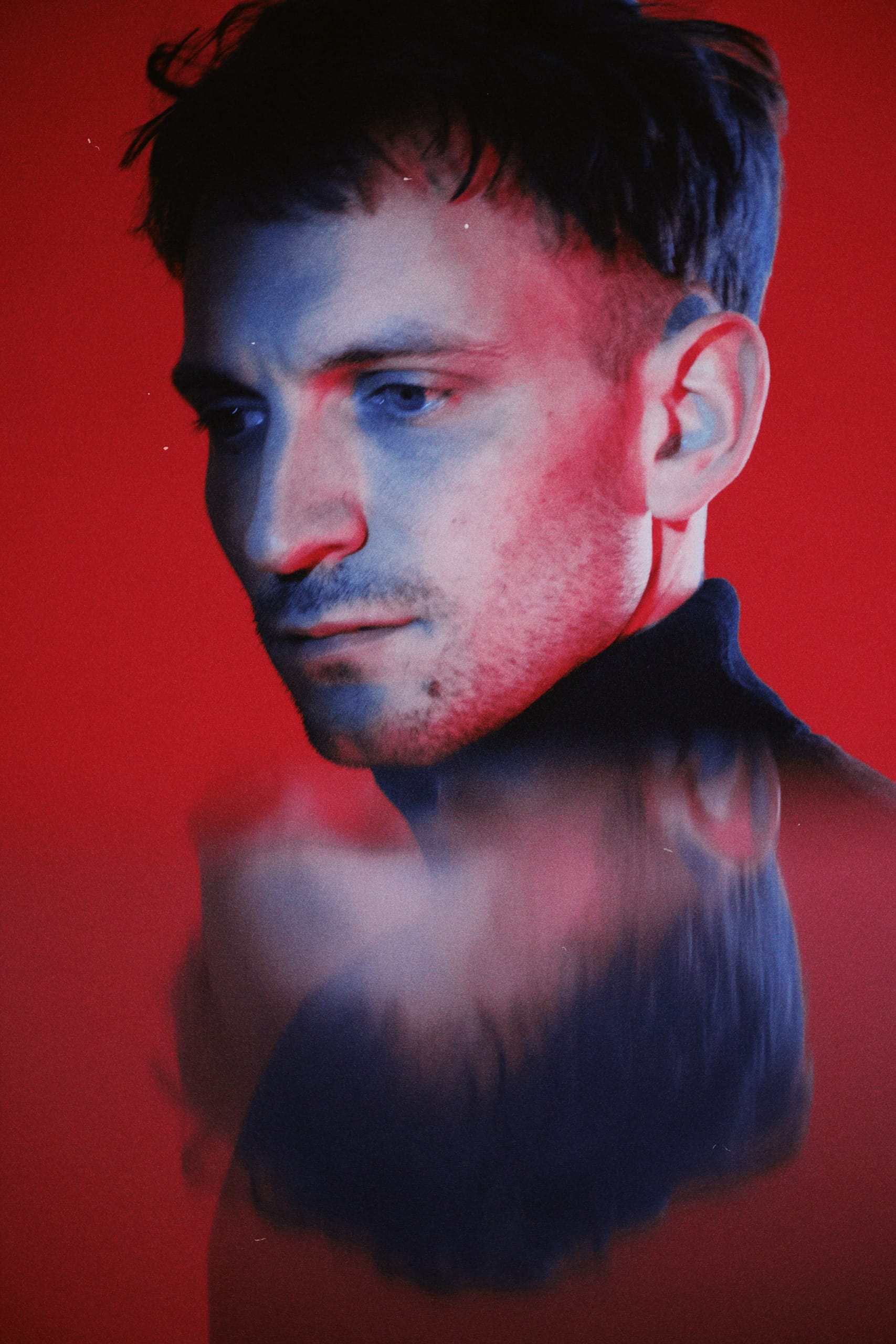
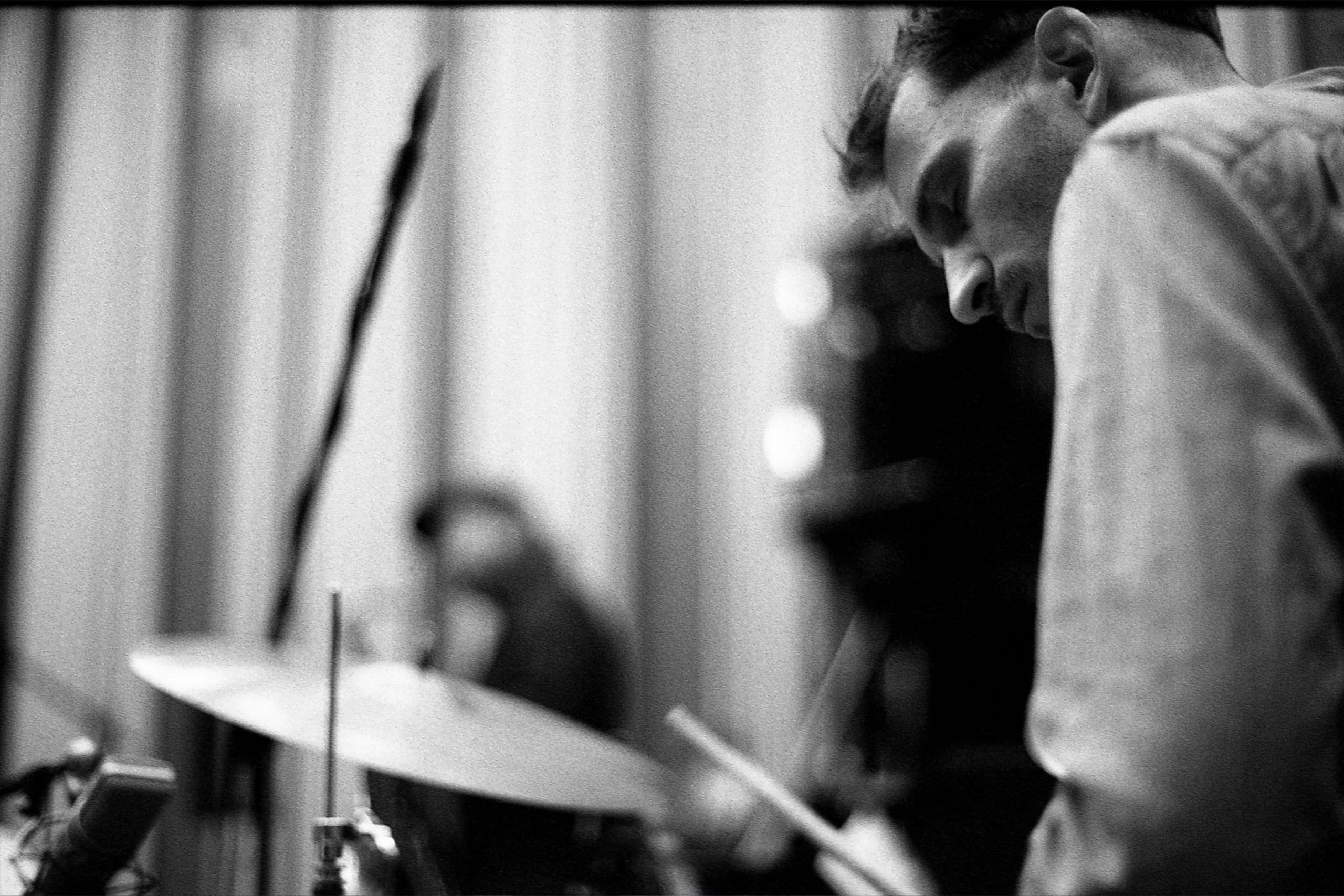
Max Andrzejewski (*1986) is a composer and improvising drummer, creating stirring, sensual experimental music and music theatre—through intuitive playfulness and conceptual limitation, through written scores and improvised structures. Max likes working with everyday materials and is interested in the beauty of mistakes and the weird social outcomes of digitization. In his projects he often brings together professional ensembles and amateur participants.

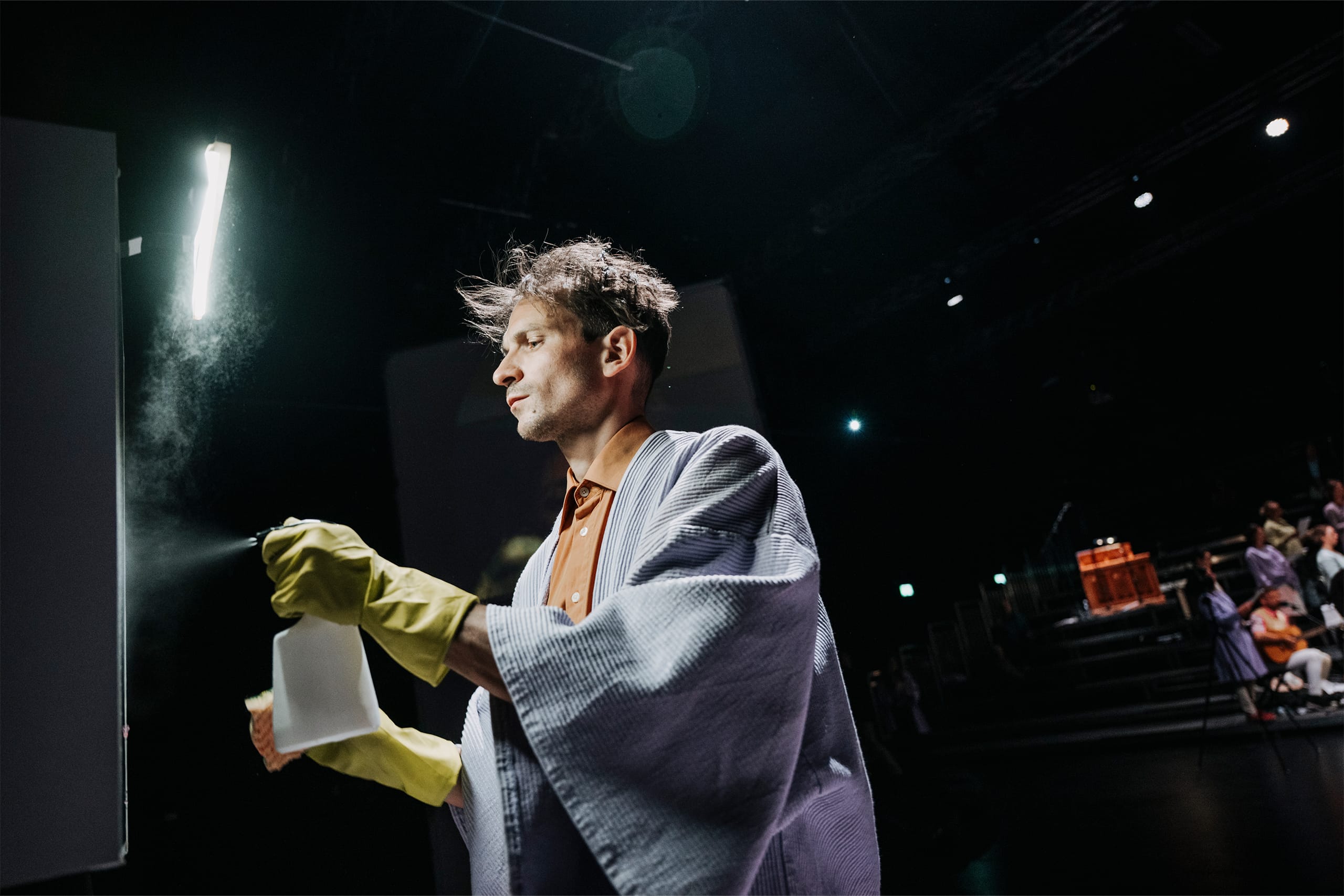
Recently, in 2026, Andrzejewski realized his immersive music theater piece SATISFACTIONACTION at the Deutsche Oper Berlin and the Beethovenfest Bonn. Also that year he released the album SUMMEN, featuring his compositions for Ensemble Resonanz and himself on improvising drum set. For that piece, Max received the German Jazz Price 2026 in the composition category.

Andrzejewski studied jazz drums at the Musikhochschule Köln and the UdK Berlin and subsequently developed into a sought-after composer alongside his work as a percussionist.

He has received commissions from institutions like the Acht Brücken Festival Köln, the Elbphilharmonie Hamburg, the Beethovenfest Bonn, the Ensemble Resonanz Hamburg, the Podium Festival Esslingen, the Regensburg Chamber Music Festival and has worked for many years as a composer with director Ersan Mondtag – at the Berliner Ensemble, the Thalia Theater Hamburg, the Munich Kammerspiele, the Theater Basel, the Maxim Gorki Theater Berlin, and many others.

He is active as an improvising drummer in the expressive band project TRAINING, collaborating with guitarist John Dieterich (Deerhoof) and Ruth Goller and releasing several albums. This project has performed at numerous festivals in Germany and abroad, including the Moers Festival, Jazzfest Berlin, Eurojazz Mexico, the Saalfelden Jazz Festival, and many others. With his oldest band, Max Andrzejewski´s Hütte, he has released five albums since 2012, two of which featured a guest vocal ensemble, and won the New German Jazz Prize in 2013.

Concert tours have taken Andrzejewski to many countries and his music has appeared on numerous albums on a variety of labels.

Press

The Wire - Phil Freeman - on TRAINING with Ruth Goller
Andrzejewski´s drums sound not only live, but alive, (...) playing like Dave Lombardo dueling with Tony Oxley.

Frankfurter Rundschau - Hans Jürgen Linke - on SUMMEN
Everything cooperates and connects without creating anything amorphous. The music operates on five levels, where it vibrates, strokes, and hisses; where pizzicato and rapid, intricate bowing combine to form an excited yet well-ordered polyphony.

Süddeutsche Zeitung Oliver Hochkeppel on Hütte
»It is a sonic rollercoaster ride, that suits the maverick aesthete Max Andrzejewski.«

Best of Contemporary Classical Bandcamp - Peter Margasak - on SUMMEN
Max Andrzejewski is one the most open-minded and versatile drummers in Berlin—a strong improviser and bandleader who embraces a wide array of practices, from the jacked-up electronic grooves of Training to the more elliptical post-bop of Hütte. In recent years he’s increasingly devoted his attention to composing music for other ensembles. Summen is a treat because it blends those two practices, featuring his nimble kit playing with a string quartet drawn from members of Hamburg’s Ensemble Resonanz. (…)

More
Peter Margasak / The Quietus / on Mythos
»The seams between disparate traditions and practices are increasingly invisible in his work, and the possibilities only seem to broaden under his assured, feverish creativity.«
Wolf Kampmann / Jazzthing / on Hütte
»A composer on the drums, whose creativity seems borderless.«
taz (GER) / on Mythos
»… convinces with dazzling tones, meandering motifs and a lack of bombast.«
 the Whole Note (CA) / on Mythos
»With musicians hired from classical and jazz worlds Andrzejewski’s 21st-century group seamlessly integrates scored composition and improvisation using both acoustic and electronics.«
Donos kulturalny (PL) / on Mythos
»[Mythos] offers an extraordinary, fascinating, surprising and extremely original experience.«
Süddeutsche Zeitung / on TRAINING
»This is free music in the very best sense, a sound-music collage that sounds in every second like that wild Berlin, …«
Musikexpress / on TRAINING
»an extraordinary jazz record has succeeded in shifting the genre boundaries with ease.«
Frankfurter Rundschau / Hans-Jürgen Linke / on Songs of Wounding
The percussionist and composer Max Andzejewski has now worked with her to transform the music into a new form, a form which Mariana Sadovska says has "found the soul of these songs".
Peter Margasak / Nowhere Street / on Hütte Reduce
Max Andrzejewski´s Hütte has just dropped a terrific new album that pares things down to the core ensemble for the first time since its 2012 debut album. (...) It’s not just the lack of guests, but a built-in formal constriction to the compositions, which tend to levitate in place. In a way this quality could be an indirect legacy of the time-freezing of Bill Dixon, mentioned above. The drummer is very active, creating a generous flow of shifting detail, quicksilver accents, and, most of all, fractal time, but his playing never draws attention to itself. Instead it does what it needs to do, offering a bubbling cauldron of rhythm for his bandmates to work with.
His tightly-coiled tunes emit a gentle optimism, with subtle hooks burrowing quickly into the memory. The grooves he carves with Lang are marvels of exploratory concision, as the musicians seek out every possible rhythmic permutation. The music references rock more than jazz, calling to mind expansive combos like Radian and Talk Talk in their measured experimentation, with Andrzejewski applying some of Martin Bradlmayr’s language to the slack drag of Jim Black. Hoffmann gets some solo space, but his greatest achievement is the placement and articulation of written parts, especially on a piece “Risse,” where clean chordal strums move around the stereo field in woozy syncopation, and thanks to overdubbing he ads zigzagging unison accompaniment to Schleiermacher’s sax lines before they break apart for simultaneous solos.
 
Victoria Szirmai / HIFI-IFAS / on Hütte Reduce
(...) Die Kompositionen Andrzejewskis nämlich geben sich hier weniger unbequem als sperrig-schön, zart suchend, ja: filigran – und erstaunlich warm und organisch (...), die Musik kitzelt den Intellekt, ohne auf körperliches Wohl zu verzichten.(...) Egal, wie frei sich die Stücke von Reduce auch gebärden – immer eignet ihnen eine gewisse Schwerelosigkeit, die dafür sorgt, dass sie selbst dem Freejazz-ungeübten Hörer nie allzu mühsam werden. (...) Leichtigkeit, Schwerfassbarkeit und detailverliebte Eleganz, zusammengehalten von tiefgründigem Intellekt und dem unbedingten Willen zu einer Ästhetik, die vom Reduzierten lebt. (...) Heraus kommt eine Platte, komplex, von mir aus auch: kompliziert, ohne jemals schwierig zu sein.
 
Bernd Gürtler / Talkingmusic / on Hütte Reduce
(...) Ein Riesenspaß, das im Albumtitel vorweggenommene Leitmotiv nachzuvollziehen, sprich Gitarre, Bass, Saxophon und Schlagzeug zuzuhören, wie sie jede Egozentrik, jedes gegenseitige Bedrängen selbst dann vermeiden, wenn sie sich doch aufeinandertreffen, stattdessen Entfaltungsräume lassen und Gemeinsinn entwickeln. Weniger ist mehr, wer wollte es bestreiten.

Wolf Kampmann / Jazzthing / on Hütte Reduce
In ihrem äußerst reduzierten Werk (...) überschreiten sie die Ränder der Jazz in Richtung Postrock, Ambient, Minimal Music und Aleatorik (...) Anstelle der ehemaligen Dichte ist ein Feeling von multipler Transparenz gerückt. (...) Das Quartett zeigt sich in einer völlig neuen Verfassung, die ihr ausgezeichnet zu Gesicht steht.

Ulrich Steinmetzger / Jazzpodium / on Hütte Reduce
(...) Man kann aber auch einfach nur darüber staunen, zu welcher Souveränität das Quartett Hütte des Schlagzeugers und Komponisten Max Andrzejewski in den elf Jahren seiner Existenz gefunden hat. Der Bandleader ist nicht nur ein immens strukturierender Drummer, sondern auch ein Denker von Konzepten. (...) vielmehr ist da ein schwereloses Schweben von großer Transparenz. Abstrakte Kompositionsbilder von großer Schönheit und Suggestivkraft (...). Es ist keine kleine Kunst, den Hörer zur Beschränkung, zum Bremsen, zum Innehalten zu verführen, ihn dabei in seinen Bann zu ziehen mit einer Intensität, die aus der Ruhe wächst.

Ingo Baron / Drums&Percussion / on Hütte Reduce
(...) Die Kompositionen sind bewusst luftig und fließend gehalten. Andrzejewski selbst spielt mit viel Raum und Gespür für Klang. So einsteht eine langsame, fast meditative, aber dennoch spannungsreiche Musik, die sich irgendwo im Bereich zwischen Jazz und hingetupfter Kammermusik bewegt.

Juan Martin Koch / Neue Musik Zeitung / on An den Rändern der Risse
Am weitesten aus dem Kammermusikfenster hatte sich das Festival schon zur Eröffnung gelehnt: mit einer erfrischend offenen, frei-assoziativen Musiktheateruraufführung. (…)

TAZ / Sophie Emilia Beha / on Mythos
Für seine eigene Rheingold-Ouvertüre, bei Andrzejewski „Mythos I“, hat er das vierminütige Original auf eine schlappe Sekunde eingedampft, das Ganze elektronisch noch extrem verzerrt und das als Ausgangspunkt für seine Komposition hergenommen. Heraus kommt ein penetranter elektronischer Schwellkörper, der nach einigem Pulsieren von hellen Bläsern und Streichern abgelöst wird. (...) In „Mythos II“ (dem Äquivalent zur Walküren-Ouvertüre) ist es ein Bratschenmotiv – allerdings rhythmisch komplett anders zusammengesetzt und verteilt auf mehrere Instrumente. Hier brauchen sich die Mu­si­ke­r*in­nen nicht an die festgelegte Notation zu halten: Sie können die Stelle mit selbstgewählter Artikulation und im Tempo ihrer Wahl spielen. Dadurch entstehen Unschärfen, lebendige Abweichungen und Kontrollverluste. Max Andrzejewski vereint auf „Mythos“ zwei seiner Grundinteressen: freie Improvisation und Komposition.

Peter Laudenbach / Süddeutsche Zeitung / on Mythos
Die Musik von Max Andrzejewski dagegen breitet mit großer Raffinesse zwischen Ambient und Neuer Musik einen suggestiv wabernden Soundteppich aus.

Katja Kollmann / TAZ / on Mythos
"Die von Max Andrzejewski frisch komponierte Musik (...) entwickelt eine starke Suggestionskraft, so entfaltet sie in den Ouvertüren eine eigene, von Wagner völlig unabhängige Dramatik. (...)"

Steffen Greiner / Musikexpress
Andrzejewski ist seit Langem im Berliner Jazz-Umfeld als Projekt- und auch Szene-Hopper bekannt, er macht experimentelle Theatermusik, genauso wie Rock, sein Projekt Hütte ist so etwas wie ein deutsches A Silver Mt. Zion, ein schwer einzuordnendes Kollektiv zwischen allen Stilen.

Joseph Neff / The Vinyl District
The results resonate with the freshness of prime modernist classical, though there are also prominent (and appealing) electroacoustic aspects at play.

Peter Margasak / The Quietus / on Light Tied
I can’t say how these pieces were transformed during the entire process, but the end result is stunning, deftly weaving extended techniques into neatly plotted frameworks, whether it’s sibilant unpitched breaths, scratch tones, or electronically manipulated string sounds. (...) Every spin reveals new sonic discoveries, with a mutually beneficial play of form and sound.

Max Andrzejewski

IMPRINT

View